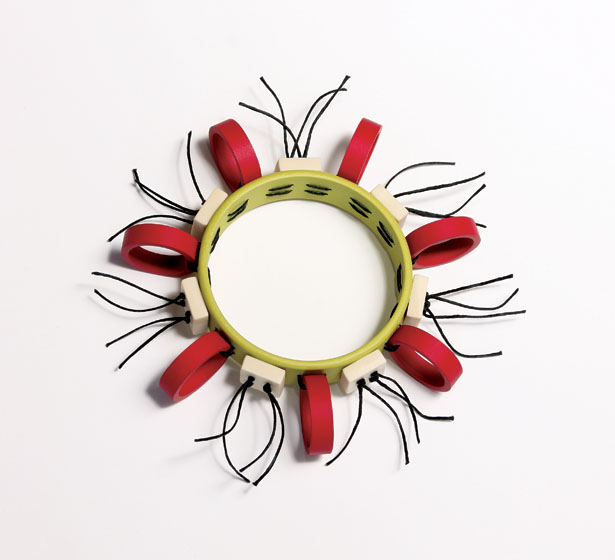
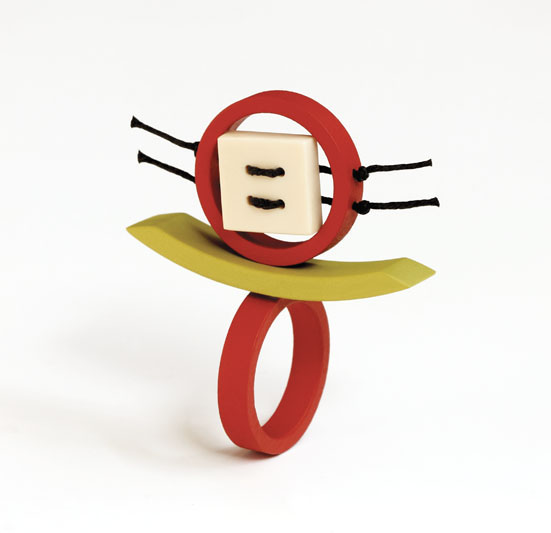
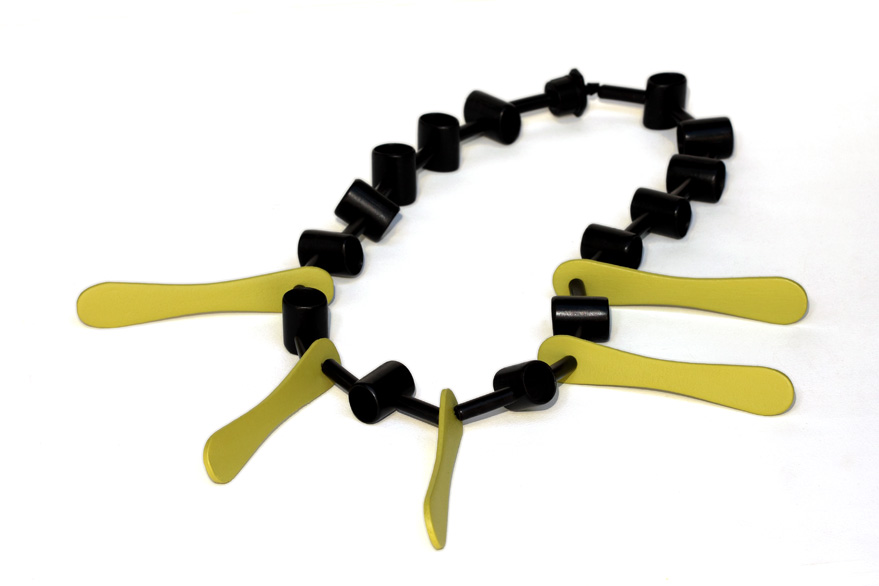
Three pieces of jewellery of my serie Suburban Tribal will be presented from 7 to 17 July at the In Transit exhibition in Sydney in conjunction with the JMGA biennale conference EdgesBordersGaps
Opening Saturday 11 July, 4 to 6pm. Depot II gallery, 2 Danks Street, Waterloo, NSW
Trois bijoux de ma série Tribu de Banlieue seront présentés du 7 au 17 juillet à l’exposition En Transit à Sydney conjointement avec la conférence biannuelle du Groupe des Bijoutiers et Orfèvres d’Australie
With the Suburban Tribal serie, I associate life in Australian suburbs with one in a tribal society. In this context, jewellery is worn for rituals and to honour deities as well as for beautification and adornment. In our suburban society, we have placed the house and the car on an altar and we worship them in pagan rituals. In traditional tribal society, jewellery is usually made with humble materials that are easily available. This is the case of the discarded plastic pipes and conduits from building sites that I repurposed, they are not precious materials. This serie is part of a body of work I named A Renovator’s Dream – a pun on the loss of the meaning of the ancient indigenous Dreaming in contemporary Australia.
Avec la série ‘Tribu de Banlieue’, j’associe la vie dans les banlieues australiennes à celle d’une société tribale. Dans ce contexte, les bijoux sont portés pour des rituels et pour honorer des dieux, ainsi que pour la décoration et la beauté. Dans nos sociétés banlieusardes nous avons placé la maison et la voiture sur un autel et nous les vénérons dans des rites païens. Dans les sociétés tribales traditionnelles, les bijoux sont en général faits de matériaux humbles qui sont facilement disponible. C’est le cas ici pour les tuyaux et conduits que j’ai recyclés, ce ne sont pas des matériaux précieux. Cette série fait partie d’un ensemble de travail que j’ai appelé ‘Un Rêve de Rénovateur’ – un jeu de mot sur la perte, dans la société australienne contemporaine, du sens originel du Rêve aborigène.
“Here stands the mean, uncomely stone, Tis very cheap in price! The more it is despised by fools, The more loved by the wise. ” Arnaldus de Villanova, 13th century alchemist (1)
I find the activity of repurposing utterly exciting and satisfying. Somehow the verb ‘ to repurpose’ is more accurate than ‘to recycle’ in describing what I’m doing by creating jewellery out of junk: it gives more the idea of an intent, a purpose. It’s not just avoiding the waste of material through the act of recycling, it is to adapt it for use in a different purpose.
There is something magical in the process of transforming a piece of discarded material into a piece of adornment. It feels like an alchemy, which is usually known as the ability to transform base metals into noble metals (gold or silver).
Making something beautiful out of scraps, of bits and pieces that I have collected, not only gives me pleasure during the process of creation and when seeing the final result, but also it is very empowering and structuring. As I create an object on the outside, I create myself from the inside. It helps me define who I am and what I do. I see beyond the junk, I visualise in my mind shapes and form. By making this vision or this dream real, I am projecting out something from within. Making conscious the unconscious.
“It was through understanding the significance of alchemical symbolism that Jung came to formulate his central concept of individuation” says Maureen B. Roberts, Ph.D (2). She continues: “In the alchemical search for the Philosophers’ Stone Jung saw a direct parallel to the quest for the divine inner centre of the self. As base metals are gradually transmuted into gold, the ultimate unity and perfection, so unconscious processes manifesting themselves as archetypal images and symbols are transformed into the psychological equivalent of gold or the Stone, the undivided self. Thus the symbolism of the alchemical process represents a centralising and unifying instinct which culminates in the production of the self as a new centre of totality” (3)
Looking at what I have made, as if looking in a mirror, I see who I am.
1. C.G. Jung, Memories, Dreams, Reflections. Article selection by S. Parker, PhD. Accessed 17/06/2015 http://jungcurrents.com/alchemy
2. M. B. Roberts, Beautiful Circuiting: The Alchemical Imagination in English Romantism, Text from: The Diamond Path: Individuation as Soul-making in the Works of John Keats, 1997. Accessed 17/06/2015 http://www.jungcircle.com/beautiful.html
3. C. G. Jung, Psychology and Alchemy, trans. R. F. C. Hull, 2nd ed. (Princeton, NJ: Princeton UP, 1970) 115. Accessed 17/06/2015 http://www.jungcircle.com/beautiful.html
“Ici se tient la pierre mauvaise et laide
Qui vaut très peu en prix
Plus elle est méprisée par les idiots
Plus elle est aimée par les sages »
Arnaldus de Villanova, alchimiste du 13eme siècle (1)
Je trouve l’activité de réutilisation et de transformation passionnante et satisfaisante. Le mot ‘recycler’ n’est pas tout à fait assez précis pour décrire ce que je fais en prenant un vieux matériel et en le transformant en un bijou. En réutilisant et en transformant, il y a l’idée d’une intention déterminée. Il y a quelque chose de magique dans ce processus, une sorte d’alchimie, qui est habituellement connue comme la capacité de transformer les métaux de base en métaux nobles comme l’or et l’argent.
Faire quelque chose de beau à partir de déchets, de trucs ramassés ici et là, me procure du plaisir non seulement pendant l’acte de création et une fois terminé en voyant le résultat final, mais je trouve également que cette activité est très stimulante et structurante. Alors que je crée un objet à l’extérieur, je me crée également à l’intérieur. Cela m’aide à définir qui je suis et ce que je fais. Je vois au-delà du truc que j’ai ramassé, je vois dans mon esprit des lignes et des formes. En rendant cette vision ou ce rêve réel, je projette à l’extérieur quelque chose de l’intérieur de moi. Je rends conscient l’inconscient.
« C’était par la compréhension de la signification du symbolisme de l’alchimie que Carl Jung en est venu à formuler son concept central d’individualisation » dit M. Roberts (2). Elle continue : « dans la recherche alchimique de la pierre philosophale, Jung a vu un parallèle direct avec la quête du centre divin intérieur du moi. Alors que les métaux de base sont graduellement transformés en or, l’union ultime et parfaite, de la même manière les processus inconscients qui se manifestent sous forme d’images archétypes et de symboles sont transformés dans l’équivalent psychologique de l’or ou de la pierre philosophale, le soi non divisé. Donc le symbolisme du processus alchimique représente un instinct unifiant et centralisant qui culmine avec la production du soi comme nouveau centre de totalité » (3)
En regardant ce que j’ai fait, comme en regardant dans un miroir, je vois qui je suis.
Continuing on my series A Renovator’s Dream – repurposing discarded materials – to be presented at the exhibition In Transit in Sydney at Depot II Gallery from 7 to 17 July (invitation coming…)
Je continue à préparer ma série “Un Rêve de Rénovateur » – en recyclant des matériaux qui ont été jetés – et qui sera présentée à l’exposition En Transit à Sydney à la Galerie Depot II du 7 au 17 juillet prochain
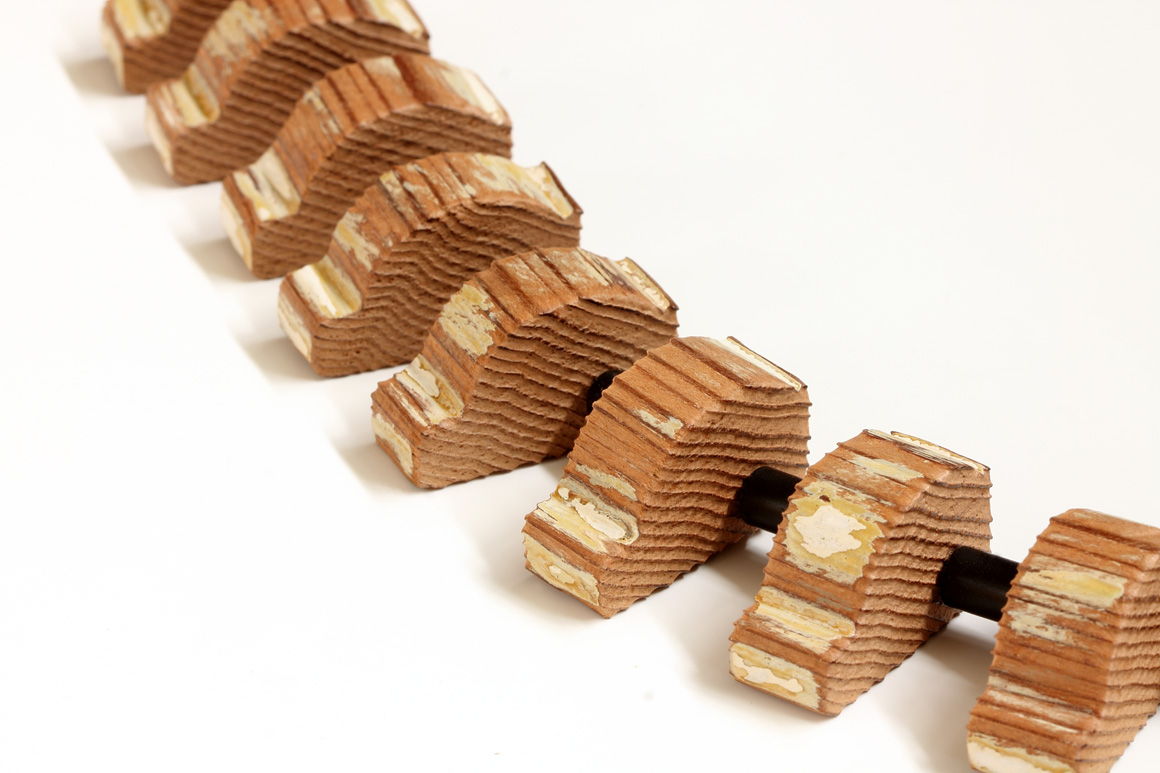
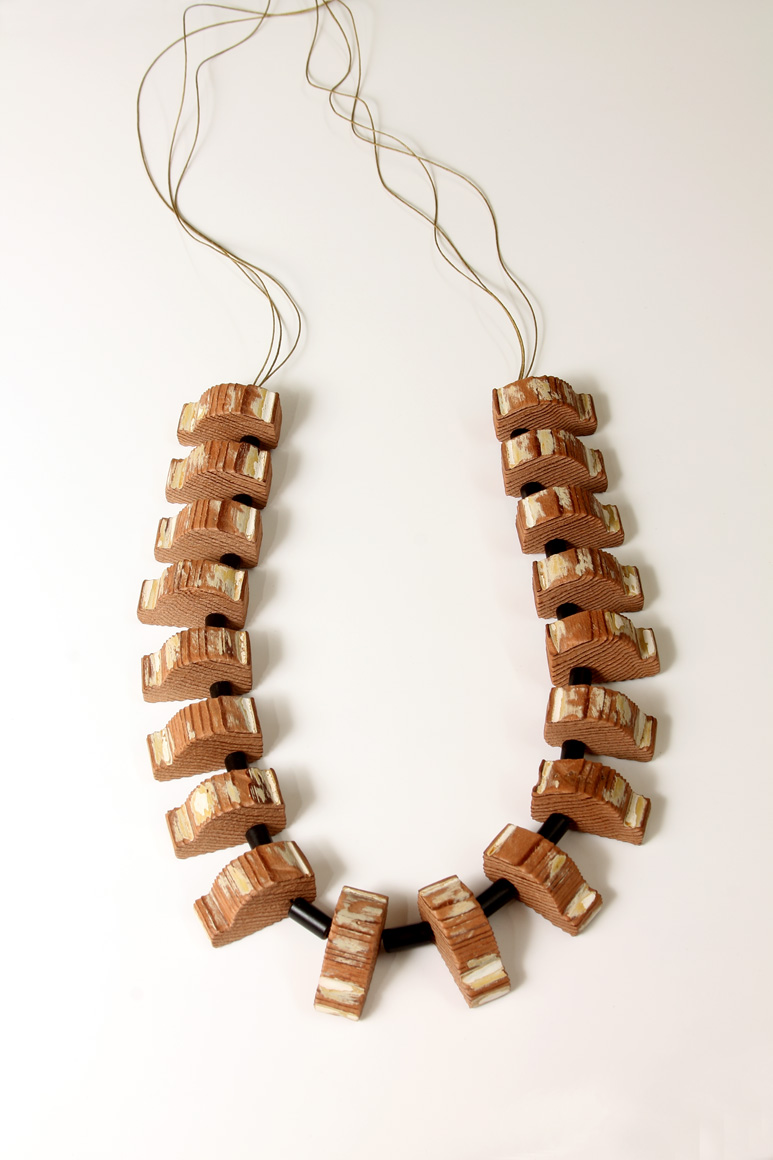
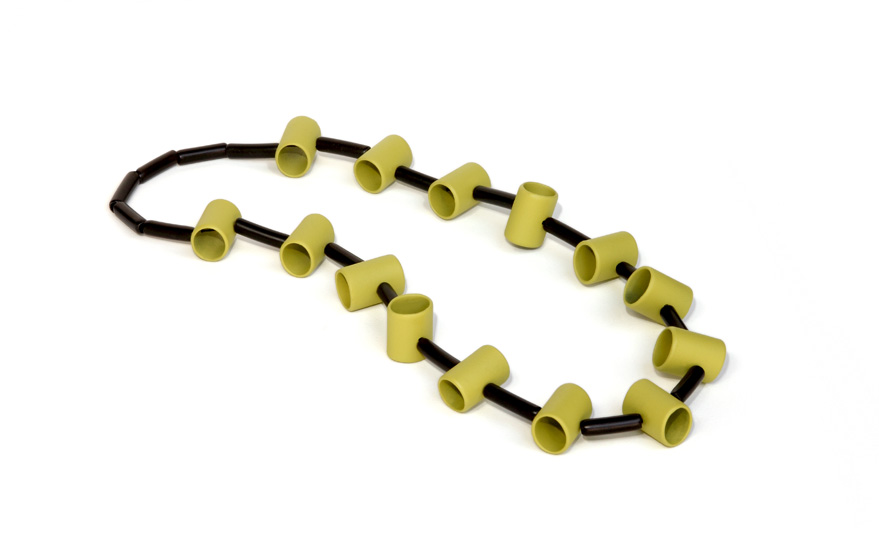
In honour of my dear friend Rosemary, I will be wearing this necklace tomorrow at her funeral.
En l’honneur de ma chère amie Rosemary, je porterai ce collier demain à ses obsèques.
In memoriam, Rosie 1
Her obituary reads: “her talent, intelligence, humour, integrity and loyalty has enriched the lives of family, friends, fellow musicians, colleagues and patients. Her life was a brilliant one.”
Sa nécrologie dit que : « son talent, son intelligence, son humour, son intégrité et sa loyauté a enrichi la vie de sa famille, ses amis, ses confrères musiciens, ses collègues et ses patients. Sa vie a été brillante »
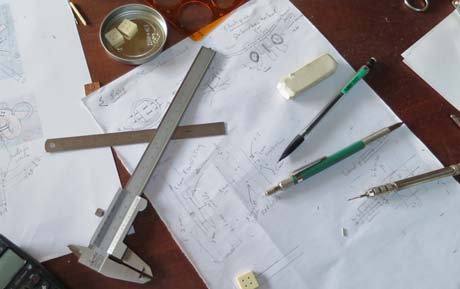
She was fully in my heart and mind this last week as she inspired me in my studio, upcycling trashed plastic pipes into necklaces.
Elle était très présente dans mon cœur et mon esprit cette semaine passée pendant qu’elle m’inspirait dans mon atelier a “upcycling” des tuyaux de plastiques jetes en colliers.
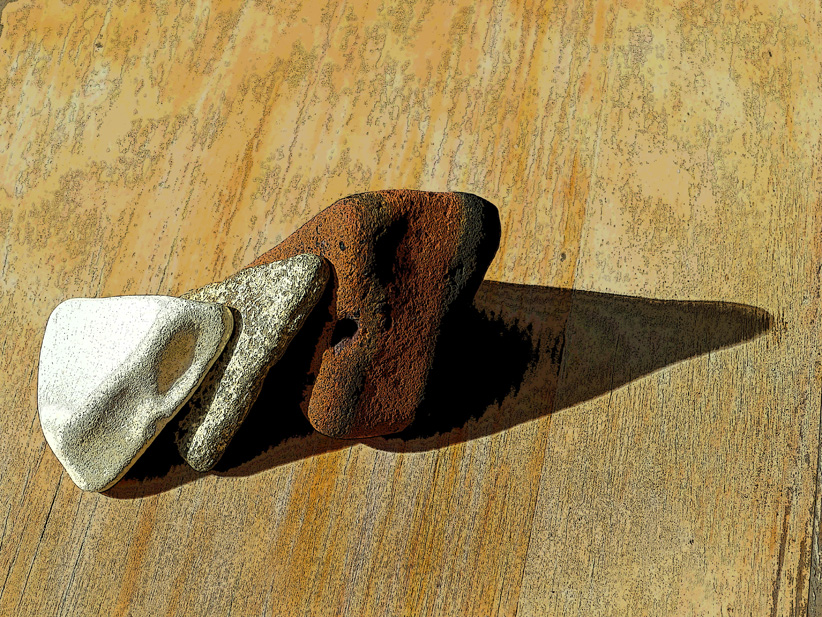
These two artworks speak of the making of my new identity as a French woman migrant in Australia and emerging artist.
They show two levels of appropriation and interpretation:
Firstly, I assembled shards found on the beach, remnants of earlier European settlement. I staged these found objects as one would of living characters; I enjoyed the play of their relationships.
During that period of assemblage, I wrote about my emotions.
In a second phase I photographed my sculpture and digitally edited it. By including my writing into the image I put myself into the landscape. I created a sense of belonging.
Showing your work as an artist – especially emerging as I am – involves a certain degree of risk. Part of the process of becoming an artist is getting used to show your work, and getting used to receiving feedback, whatever it is going to be, including silence. We would all love to receive only praises and compliments. Like the child that runs to her mother to show the drawing that she just made. She wants to hear her mummy say ‘that’s beautiful darling, do another one’. But hey, not everyone in the audience is your mummy and we have to live in peace with ourselves and our art hearing things like ‘it’s nice’ or ‘it’s different’.
As American painter Franz Kline put it: “The real thing about creating is to have the capacity to be embarrassed.” I recently discovered that saying and I love it. My experience is that being a creative artist resides in my ability to expose myself, vulnerable, with my doubts and anxiety, and to keep to doing it. “Just DO!” as Sol LeWitt brilliantly wrote to his young artist friend Eva Hesse.
Descartes is famous for his saying ‘I think, therefore I am’. With all due respect for the French philosopher, from whose culture I come from, thinking is just not enough to make me who I am. My thoughts go around in circle, in some sterile, repetitive motion, if they are not expressed in some way. I need to say something, or do something with that thought in order to feel that this idea takes form in a material way. Speaking is the primordial way for a human being to express one’s existence; it is a baby’s first cry. Speech is a form of creation. To let the word say what one feels, what one thinks. Making art is another form of creation, through matter, colour, and form. It is a way of saying ‘here I am, this form, this shape, these colours, this is me’. I want to share it with you and hear how it makes you feel.
I’m not all rational, logical, and Cartesian. I am emotional, impulsive, and intuitive; especially when it comes to creating something. First comes out the emotion, the intuition. Second comes out the analytical, rational mind.
Creating is a self-referral process. As the Bhagavad-Gita (IX.8) says ‘Curving back on my own Nature (my Self), I create again and again’. For this creative process to happen, it needs to take on a direction, to flow out and take form. There are constantly three elements interplaying with each other – the creator, the process of creation and the object being created – yet at all time there is an experience of wholeness and oneness.
Julia Cameron has warned us in The Artist’s Way of the danger of showing ones’ work at a too early stage, before one has reached a safe degree of confidence in one’s creation. She says that “creativity flourishes when we have a sense of safety and self-acceptance.” (p42) There are saboteurs of art out there, often blocked artists themselves, who – consciously or unconsciously – will stab you with a sharp line. But once you feel satisfied with the work done, once you feel you have achieved what you wanted to say, then you can expose yourself – in all meaning of the word. Everyone is entitled to their own opinions and you can now hear them all. It won’t stop you saying what you wanted to say, because you’ve already spoken. You’ve already created that piece of something that was part of you, itching inside, that you’ve pulled out, and hung on the wall for everyone to see.






 blandine hallé